

Properly handling a cable, especially a vfd cable, is essential in modern motor-drive systems. One of the most important tasks in drive systems is learning how to terminate and perform proper shield termination during terminating vfd cable procedures. If done incorrectly, electrical noise, EMI issues, and premature motor damage can occur.
This guide explains how to properly terminate the shield, choose the right cable gland, perform correct termination, and avoid mistakes that can affect system performance. If you work with drives, automation, or industrial motors, this article will help you improve installation reliability and prevent costly electrical problems.
Article Outline
- Article Outline
- What Is a VFD Cable and Why Does Cable Shield and Termination Matter?
- Why Is Shielded Cable Important in Variable Frequency Motor Systems?
- How Does Improper Cable Termination Affect Motor Performance?
- What Tools and Components Are Needed to Terminate VFD Cable Correctly?
- How Do You Prepare the Cable Before Termination?
- How to Terminate the Shield Using Proper Cable Glands?
- Should You Terminate Both Ends of a VFD Cable?
- What Are Common Mistakes When Terminating VFD Cable Shield?
- How Does Shield Termination Reduce EMI and Noise Currents?
- What Are Best Practices for Long-Term Cable Installation Reliability?
- Key Takeaways
What Is a VFD Cable and Why Does Cable Shield and Termination Matter?
A vfd cable is a specially designed cable used between a drive and a motor in systems using variable frequency drives. Unlike standard power wiring, this cable must handle high switching frequencies and fast voltage changes produced by VFDS. These rapid electrical changes create unwanted electrical noise and emi, which can travel along the cable and affect other equipment.
Because of this, the cable shield plays a critical role. The shield—often made from copper braid or foil—helps contain electrical noise by providing a controlled return path for stray current. Proper shield termination ensures that high-frequency noise is directed safely to ground rather than radiating outward.
If the termination of vfd wiring is done incorrectly, electrical noise can escape the cable. That may cause significant interference with sensitive equipment or nearby automation systems. It can also reduce drive efficiency and even shorten the life of the connected motor.
Why Is Shielded Cable Important in Variable Frequency Motor Systems?
A shielded cable is essential when connecting drives to motors because the switching electronics in a drive generate high-frequency current pulses. These pulses can create uncontrolled electrical noise if the system uses unshielded cable. Over time, this noise can spread throughout the facility’s wiring.
Using a properly designed VFD cable—especially copper-tape shielded cable or braided designs—helps contain those high-frequency signals. The braid or foil shield surrounds the conductor bundle and acts as a barrier that prevents electromagnetic radiation from escaping.
Correct shield termination also protects the motor bearings from damage caused by circulating electrical current. Without a proper return path for stray current, these currents may pass through motor bearings, leading to premature wear and cable failure conditions in severe cases.
How Does Improper Cable Termination Affect Motor Performance?
An improper termination of a cable can create many problems in drive systems. When the shield is not connected properly, noise currents may escape into the surrounding environment. This can create electrical disturbances in control wiring and instrumentation.
Poor termination can also allow electromagnetic interference to reach nearby drives, PLC systems, or sensors. Such electrical disturbances are often difficult to diagnose because symptoms appear intermittently. Engineers may experience random faults or communication errors in nearby equipment.
Another issue occurs when the cable’s copper shield is not properly connected to ground. Without this connection, stray current can circulate through the motor frame and motor bearings. Over time, this electrical activity may damage the drive or degrade motor performance.
What Tools and Components Are Needed to Terminate VFD Cable Correctly?
Proper terminating vfd cable requires several specialized components. A good termination kit is essential because it ensures that the shield, connector, and terminal connections are installed properly. Many termination kit solutions include clamps, grounding hardware, and instructions for safe installation.
A quality cable gland is also critical. Many installers use a cable gland that makes 360-degree grounding contact. This type of gland provides 360-degree contact with the cable, ensuring continuous electrical connection around the cable shield.
For industrial environments, installers may also use NPT conduit tray cable systems or armored designs. In armored cable applications, a connector for armored cable installation may serve as both a gland and a mechanical support device. This type of connector protects the cable while ensuring reliable termination.
How Do You Prepare the Cable Before Termination?
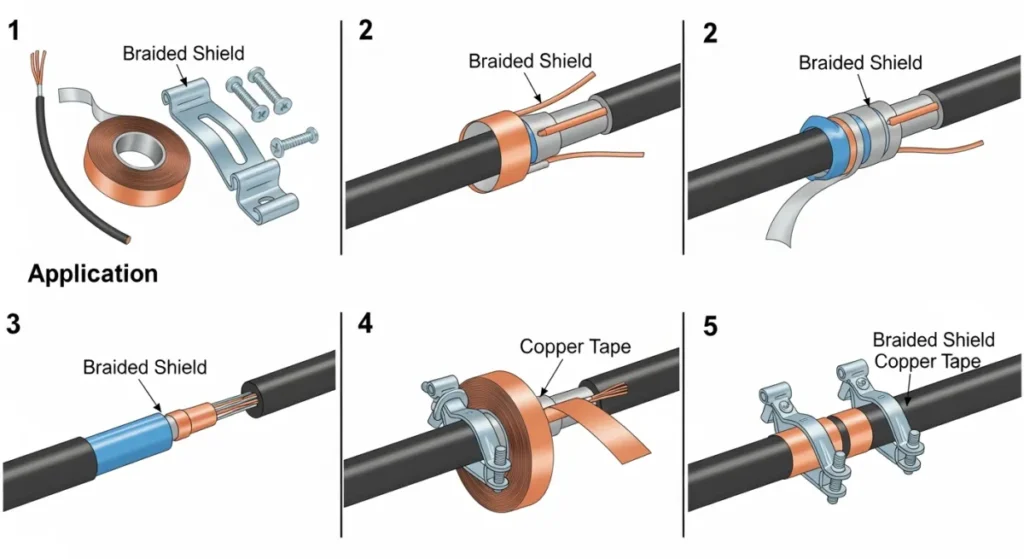
Before attempting to terminate, the technician must carefully prepare the cable. The outer jacket is removed to expose the braid or foil shield without damaging the internal conductors. Care must be taken so that even the cable insulation is not nicked while stripping.
Next, the braid or foil may be folded back with a slight overlap to ensure good grounding contact. In some cases, installers wrap adhesive-backed copper tape around the exposed area to strengthen the shield termination and improve electrical contact.
The technician should also inspect the cable before proceeding. If the cable is bent too sharply or the braid becomes damaged, the installer should trim and prepare the cable again. Proper preparation prevents cable failure later in the system lifecycle.
How to Terminate the Shield Using Proper Cable Glands?
To properly terminate the shield, installers typically use a gland that makes 360-degree contact with the cable shield when tightened. This design ensures a continuous electrical connection that allows the shielding to work effectively.
During installation, the clamp is placed around the exposed braid. The cable gland that makes 360-degree bonding contact compresses around the shield, providing contact with the cable shield all around the circumference. This type of termination greatly improves shielding performance.
Inside the enclosure or drive cabinet, the shield connection is typically secured with a brass bolt or flat plate. Sometimes installers use a flat plate with a bolt to press the braid against grounded metal surfaces. This creates a reliable termination that ensures high-frequency currents safely reach ground.
Should You Terminate Both Ends of a VFD Cable?
One of the most common questions in drive installation is whether to terminate both ends of the vfd cable. In most modern systems, the cable shield should be terminated at both ends—at the drive and at the motor.
Proper grounding at ends—at the VFD cabinet and the motor housing ensures the shield provides a full return path for stray current. This method enables the shield to effectively contain high-frequency noise generated by the drive.
In many cases, the shield should be terminated at both ends—at the drive cabinet and motor terminal box. This approach is widely recommended for high-frequency drive systems because it improves EMI control and prevents interference.
What Are Common Mistakes When Terminating VFD Cable Shield?
One mistake is failing to terminate the shield correctly when installing the cable. If installers leave the shield floating or only partially connected, the shield termination becomes ineffective.
Another common problem occurs when installers use standard glands instead of a cable gland designed for shielding. Without 360-degree contact with the cable, the shield may not provide proper protection.
Improper installation may also leave gaps that allow ingress of dust or moisture into the enclosure. Over time, this can affect electrical connector reliability and increase the likelihood of system faults in service drive setups or similar industrial systems.
How Does Shield Termination Reduce EMI and Noise Currents?
The purpose of proper termination is to ensure the shield safely carries high-frequency electrical energy away from the motor wiring. When properly installed, the shield forms a controlled return path for stray current.
This helps with keeping them contained, preventing electrical noise from spreading through the facility. Without proper termination, electromagnetic energy may radiate outward, creating interference with nearby equipment.
Many cable manufacturers design specialized VFD cables to help control high-frequency noise and improve shielding performance in drive systems.
What Are Best Practices for Long-Term Cable Installation Reliability?
To ensure long-term reliability, technicians should always use the proper cable type designed for drive systems. High-quality vfd cable is built to handle the voltage spikes and switching frequencies produced by variable frequency drives.
Installers should also follow the manufacturer’s instructions when using a termination kit. Some manufacturers manufacture self-terminating connectors for direct connection methods, which simplify the process and improve consistency.
Finally, ensure the connector and terminal hardware are secure before commissioning the motor system. Whether using conduit tray cable as well, armored designs, or NPT conduit tray cable, the key goal is to install the cable properly and maintain good grounding practices. These steps improve system reliability and reduce the risk of costly downtime.
Key Takeaways
- Proper cable shield termination is essential for safe and reliable vfd cable operation.
- The shield provides a controlled return path for stray current and helps reduce emi.
- Always terminate the shield with a cable gland that makes 360-degree grounding contact.
- The cable shield should usually be terminated at both ends—at the drive and motor.
- Use a quality termination kit, connector, and proper gland for reliable results.
- Poor termination can damage motor bearings, create interference, and affect nearby systems.
- High-quality VFD cable and proper installation greatly improve system reliability.
- Following best practices prevents costly troubleshooting and reduces the risk of cable failure.