Introduction
Irrigation is one of the most important parts of modern farming. It allows farmers to grow crops in dry areas, increase yields, and produce food consistently throughout the year. Without proper irrigation, agriculture would depend entirely on rainfall, which is unpredictable and often insufficient.
However, despite its importance, irrigation systems around the world face serious challenges. The biggest problem in irrigation today is not just a lack of water—but how water is used. Water waste and poor management have become major issues, leading to lower efficiency, higher costs, and long-term damage to agricultural land.
Understanding this problem is critical for farmers, agricultural businesses, and anyone involved in water management in farming. In this article, we will break down the key issues, explain why they happen, and provide practical solutions that can be applied today.
What is the Biggest Problem in Irrigation Today
The biggest problem in irrigation today is inefficient water use caused by outdated systems, poor planning, and lack of proper management.
In many regions, large amounts of water are lost before they even reach crops. This happens due to leakage, evaporation, runoff, and overwatering. As a result, farmers use more water than necessary while still not achieving optimal crop growth.
This issue is closely tied to water scarcity in agriculture, which is becoming more severe globally. Even areas with access to water are struggling because they are not using it efficiently.
Farmers around the world face this challenge daily. Whether in developing regions with limited infrastructure or advanced agricultural economies relying on outdated systems, inefficient irrigation continues to reduce productivity and increase costs.
Key Irrigation Challenges Farmers Face
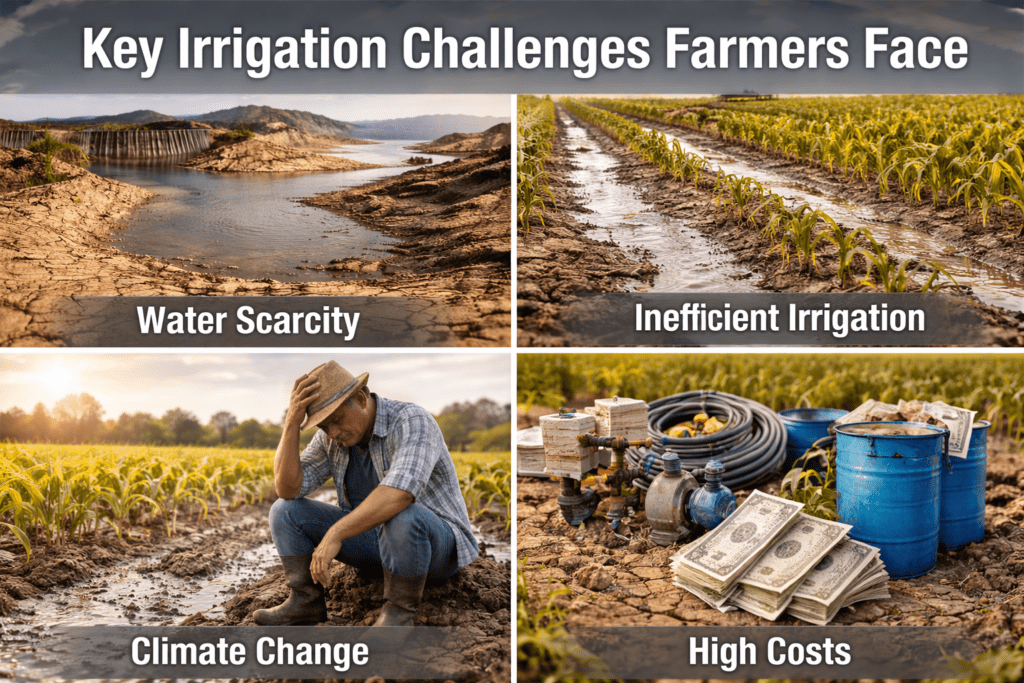
Water Scarcity
One of the most pressing irrigation challenges is water scarcity. Many regions are experiencing reduced rainfall and declining groundwater levels. As demand for food increases, the pressure on water resources grows.
This makes efficient irrigation not just important—but essential.
Inefficient Irrigation Systems
A major contributor to the problem is the widespread use of inefficient irrigation systems, such as flood irrigation. These systems waste large amounts of water and do not distribute it evenly across fields.
In many cases, only a portion of the water actually reaches plant roots.
Climate Change Impact
The relationship between climate change and irrigation is becoming more noticeable. Rising temperatures increase evaporation rates, while unpredictable weather patterns make water supply less reliable.
This forces farmers to use more water, often without improving results.
High Cost of Modern Irrigation Systems
While advanced systems like drip irrigation are more efficient, they can be expensive to install. Small and medium-sized farmers often struggle to afford these upgrades.
This creates a gap where many farmers continue using outdated methods simply because they are cheaper upfront.
Poor Infrastructure and Maintenance
In many regions, irrigation infrastructure is outdated or poorly maintained. Leaking pipes, blocked channels, and inefficient distribution systems all contribute to water loss.
Without regular maintenance, even good systems become ineffective over time.
Why Traditional Irrigation Methods Are Failing
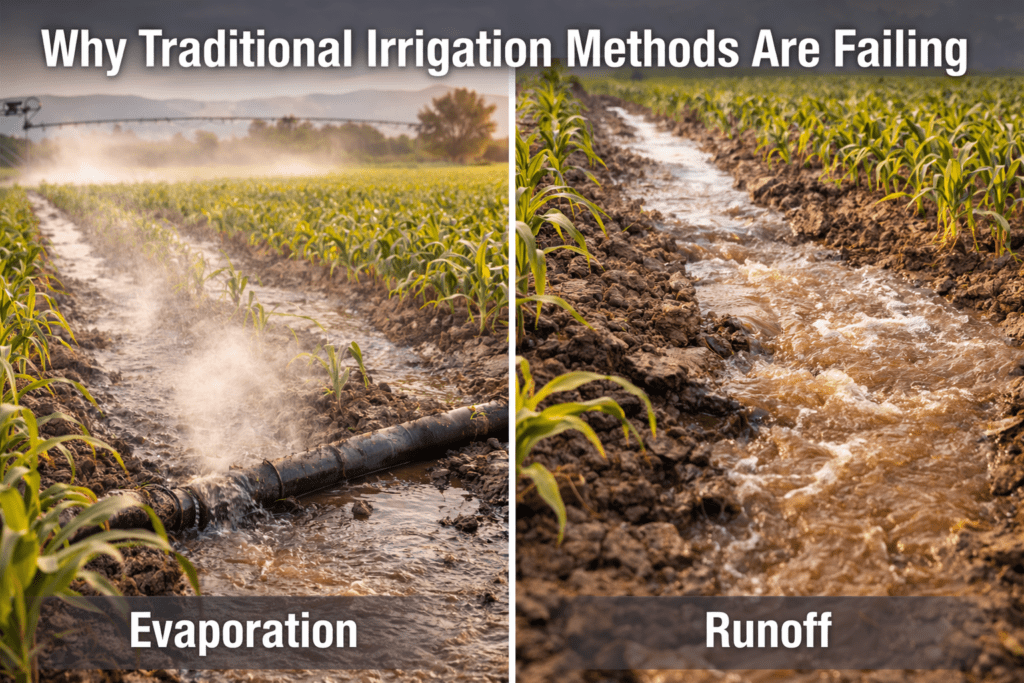
Traditional irrigation methods, especially flood irrigation, are still widely used. While they are simple and low-cost, they are highly inefficient.
Flood Irrigation Issues
Flood irrigation involves covering the entire field with water. While it may seem effective, it leads to:
- Excess water usage
- Uneven distribution
- Waterlogging in some areas
Evaporation and Runoff
A large portion of water used in traditional systems is lost through evaporation before it reaches plant roots. Additionally, runoff carries water away from fields, often taking valuable nutrients with it.
This not only wastes water but also reduces soil quality over time.
Impact of Irrigation Problems on Agriculture
Lower Crop Yields
When water is not delivered efficiently, crops do not receive the right amount at the right time. This leads to reduced growth and lower yields.
Soil Damage
Overwatering and poor drainage can cause soil erosion, salinity, and compaction. These issues make it harder for crops to grow and reduce long-term land productivity.
Financial Losses for Farmers
Inefficient irrigation increases water costs, energy usage, and labor requirements. At the same time, lower yields reduce income.
This combination puts financial pressure on farmers and agricultural businesses.
Modern Solutions to Irrigation Problems
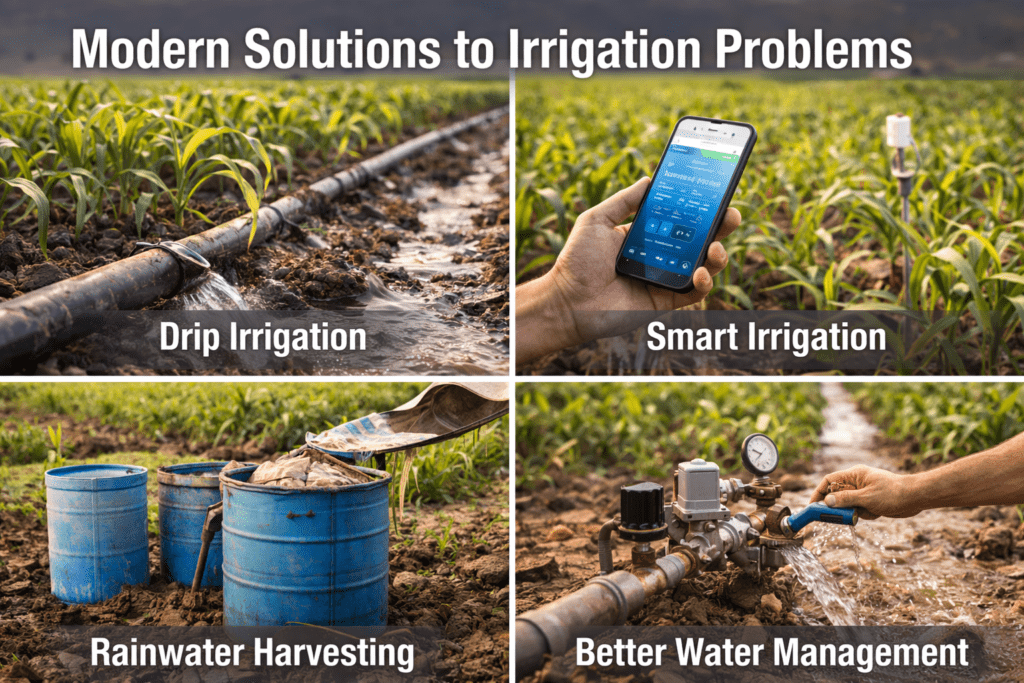
To address the biggest problem in irrigation today, farmers need to adopt more efficient and sustainable practices.
Drip Irrigation Systems
One of the most effective sustainable irrigation solutions is drip irrigation.
Drip irrigation benefits include:
- Direct water delivery to plant roots
- Reduced evaporation and runoff
- Better control over water usage
This system significantly improves efficiency and is ideal for water-scarce regions.
Smart Irrigation Using Sensors and Automation
Technology is playing a growing role in agriculture. Smart irrigation systems use sensors to monitor soil moisture, weather conditions, and crop needs.
This allows farmers to:
- Water crops only when needed
- Avoid overwatering
- Improve overall efficiency
Rainwater Harvesting
Collecting and storing rainwater provides an additional water source for irrigation. This reduces reliance on groundwater and helps manage water supply more effectively.
Better Water Management Practices
Improving water management in farming can make a big difference. This includes:
- Scheduling irrigation properly
- Monitoring water usage
- Maintaining equipment regularly
Even small improvements can lead to significant water savings.
Benefits of Efficient Irrigation Systems
Saving Water
Efficient systems reduce waste and ensure that water is used where it is needed most.
Better Crop Production
When crops receive the right amount of water, they grow healthier and produce higher yields.
Long-Term Cost Savings
Although modern systems may require an initial investment, they reduce water and energy costs over time.
This makes them more economical in the long run.
Future of Irrigation
The future of irrigation will be shaped by technology and data.
Automation, artificial intelligence, and data analytics will allow farmers to make better decisions about when and how to irrigate. These advancements will help address the challenges of climate change and irrigation while improving efficiency.
We can expect:
- More precise irrigation systems
- Increased use of sensors and real-time data
- Greater focus on sustainability
How Farmers Can Improve Irrigation Today
Farmers do not need to wait for advanced technology to start improving irrigation. Here are some practical steps that can be applied immediately:
- Check and repair leaks in irrigation systems
- Avoid overwatering by monitoring soil moisture
- Switch to more efficient methods like drip or sprinkler systems where possible
- Water crops during early morning or late evening to reduce evaporation
- Use mulch to retain soil moisture
- Keep irrigation equipment clean and well-maintained
These simple actions can significantly improve efficiency and reduce water waste.
Conclusion
The biggest problem in irrigation today is not just water scarcity—it is how water is managed and used. Inefficient systems, outdated methods, and poor planning are leading to massive water waste and reduced agricultural productivity.
By adopting better practices and investing in modern solutions, farmers can overcome these challenges. Efficient irrigation is not only good for crops—it is essential for the future of agriculture and sustainability.
Improving irrigation today means securing food production for tomorrow.
FAQ Section
What is the biggest problem in irrigation today?
The biggest problem in irrigation today is inefficient water use caused by outdated systems, poor management, and water waste. This leads to reduced crop yields and increased costs.
How can irrigation efficiency be improved?
Irrigation efficiency can be improved by using modern systems like drip irrigation, monitoring soil moisture, fixing leaks, and adopting better water management practices.
What is the best irrigation system for saving water?
Drip irrigation is considered the best system for saving water because it delivers water directly to plant roots, minimizing waste and improving efficiency.