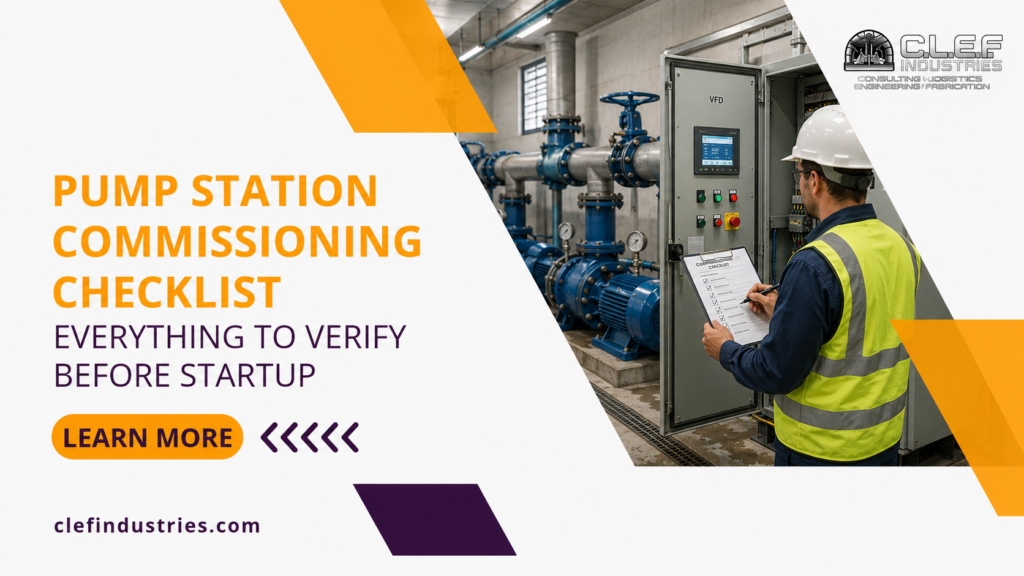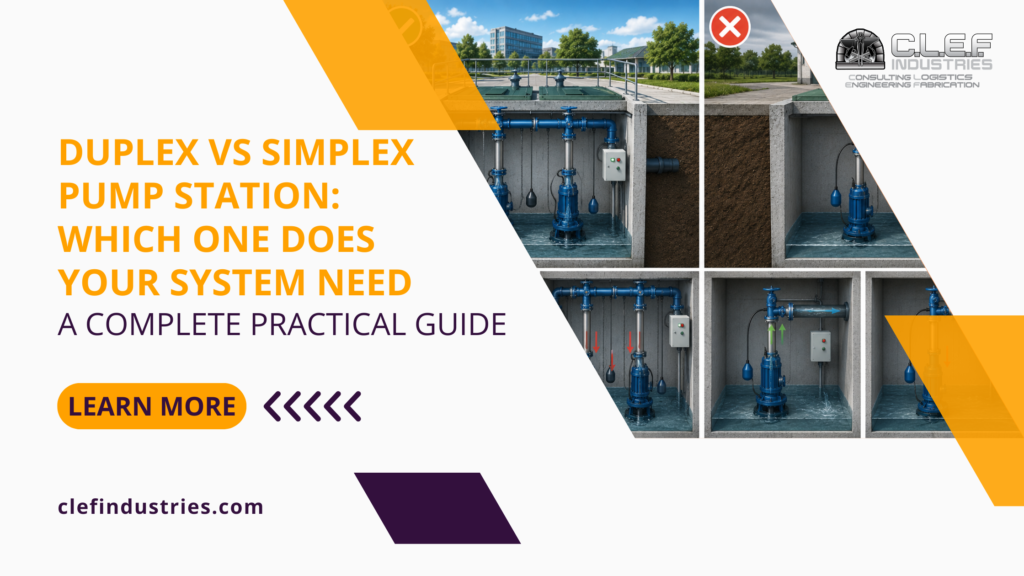
Cost to Retrofit Existing Pump Station with VFD
One of the best methods that utilities and industries can use to enhance efficiency, reliability, and control of retrofitting a pump station is by retrofitting it with Variable Frequency Drives (VFDs). However, in general, it is a question of one thing:

How much does it cost to retrofit an existing pump station with VFDs?
The answer:
It varies widely. Retrofitting a small booster pump can cost less than 50,000, whereas large, intricate pump stations can cost more than 350,000 for a single pump, and full rehabilitation of a station can cost many millions of dollars.
Retrofit of the VFD in the existing pump station is dependent on the horsepower of the pumps, electrical infrastructure, the control, and site conditions.
According to case studies and industry experience:
- Small booster pump retrofit (50-100 HP): 25,000 -50,000 (see: Hanover Engineering Project cost 48,000).
- Medium-size pumps (150-300 HP): $60,000 – $130,000 per pump.
- Large pumps (400-700 HP): $130,000 – $300,000 per pump.
Very large pumps (800+ HP): $350,000+ per pump, particularly when HVAC, switchgear, and civil adjustments have to be undertaken.
In the case of multi-pump stations, the entire project costs may reach into the 1-2 million bracket. Even in full rehabilitation projects where new controls, electrical buildings, HVAC, and safety enhancements are involved, utilities such as Burns and McDonnell clients have incurred costs of up to $8 million or more-which is less than what it takes to construct completely new pump stations.
What Makes VFD Retrofitting Worth Considering?
VFDs enable the pumps to operate at variable speeds, not at full power at all times, but at the speed needed by the actual system.
Benefits include:
- Saving of energy: 20-40 percent in variable-flow systems.
- Less cavitation and wear: Pumps work nearer to their Best Efficiency Point (BEP).
- Fewer startup/stop problems: Soft start/stop minimizes water hammer.
- Long life of equipment: A reduced load on motors, seals, and bearings.
- Enhanced control: Pressure and flow may be adjusted finely.
Nevertheless, VFDs might not provide significant savings in the case of static-head dominated systems (where pumps raise against a fixed elevation), hence cost justification is more difficult.
Key Factors That Influence Retrofit Costs
Pump Size and Motor Rating
- Small pumps: more cost-effective to retrofit, yet the savings are small.
- Big pumps: more expensive but larger prospective ROI.
- Motors that are not VFD rated can require an upgrade or rewinds.
Electrical Infrastructure
- Upgrades of switchgear and MCC are a common requirement.
- Protective harmonic filters may prove to be very expensive.
- Large VFDs may require extra HVAC/cooling.
Conditions of Hydraulic System.
- Variable-flow networks: great potential savings.
- Systems dominated by statical-head: low energy savings, which reduces the appeal of ROI.
Controls and Automation
- SCADA or tank-level control integration costs an extra $20k -100k+.
- More sophisticated reasoning can be met with the retraining of operators.
Civil and Site Work
- Areas to keep cabinets and cooling units.
- Ventilation improvements, conduits, and cable trenches.
- Safety/hazard compliance.
Typical Cost Ranges for VFD Retrofits
| Pump Motor Size | Typical VFD + Equipment Cost | Installation & Electrical Upgrades | Total Estimated Retrofit Range |
|---|---|---|---|
| 50–100 HP | $15,000 – $30,000 | $10,000 – $20,000 | $25,000 – $50,000 |
| 150–300 HP | $40,000 – $80,000 | $20,000 – $50,000 | $60,000 – $130,000 |
| 400–700 HP | $90,000 – $200,000 | $40,000 – $100,000 | $130,000 – $300,000 |
| 800+ HP | $250,000+ | $100,000+ | $350,000+ |
Real example: Hanover Engineering completed a booster pump retrofit with VFDs for $48,000. On the other end, Burns & McDonnell clients have paid $8 million for total wastewater pump station rehabilitations, which included VFDs, MCCs, HVAC, and more.
Common Challenges That Affect Retrofit Costs
Cavitation Risk
Off-curve operation of pumps or overspeeding them with VFDs can cause more cavitation damage unless there is proper training of the operator.
Operator Resistance
VFDIV users of constant-speed pumps may be perplexed by VFD control logic. In the absence of buy-in, savings are wasted.
Limited Energy Savings
VFDs might not save much power in a system that is not moving. A hydraulic study must be undertaken before commitments.
Motor Stress
VFD operation can subject older motors to harmonics or heat, which can be expensive when it fails.
Cooling and HVAC
Big drives produce heat. A retrofit of station ventilation may increase the cost by 20K-50K.
Steps for a Successful VFD Retrofit
- Perform a hydraulic and electric analysis: compare curves, energy savings, and harmonic effects.
- Compare options: in other scenarios the trimming of the impeller or control valves can be less expensive.
- Budget over the drive: add installation, MCCs, SCADA, HVAC, and contingency.
- Train operators: harmonize new SOPs with VFD operation to prevent misuse.
- Leverage rebates: Utility incentive programs may help to lower costs in the short term and shorten payback periods.
Long-Term Payback and ROI
- Energy conservation: 20-40 percent in respect to variable demand.
- Savings in maintenance: Reduced repairs, longer motor/pump life.
- Payback period: 3-7 years (usually dependent on pump size, duty cycle, and energy rates).
- Utility incentives: Can cut ROI by 1-2 years.
Within the context of full lifecycle costs, retrofitting is almost always cheaper than new construction- according to a study by Burns and McDonnell, an 8 million rehabilitation project saved the construction of a new pump station costing 22 million.
Conclusion
Conversion of retrofit systems of existing pump stations to VFD is between $25 000 and retrofitting a small booster pump to $350 000 plus retrofitting larger motors, and the complete retrofit of the entire multi-pump station is in the range of several millions.
The broad spectrum cannot be explained only by the price of VFD; it also encompasses electrical, civil, controls, HVAC, and operator preparation. Although retrofits are not always the most affordable method, it can be long-term cost-effective and reliable when well thought out.
The trick is that one should be careful in its evaluation. A hydraulic study, a budget beyond the drive, and operator training will enable the retrofits to provide the efficiency and reliability benefits to justify the cost.