Smart Pumping Solutions
Because efficiency is no longer a choice in industry, smart pumping systems have become very important. Research is being put into use in manufacturing, water treatment, pharmaceuticals, and food processing to help businesses depend less on energy. Having EG Controls in pump systems is one of the main technologies making this transformation possible.

What makes Smart Pumping Systems so essential?
Many industrial processes depend on pumps. It is vital for them to move both water and chemicals because of their role. However, old-style pump systems usually do not run efficiently.
- The speed at which they function is set and not affected by how busy they are.
- People do not notice failures until something major goes wrong.
- Energy use is still high since machines work all the time.
Unlike standard systems, smart pumping systems keep flow regulated by sensors, automation, and intelligent computer controls in response to real-time demands. Apart from lowering energy use, it enhances how the system operates altogether.
What EG controls are?
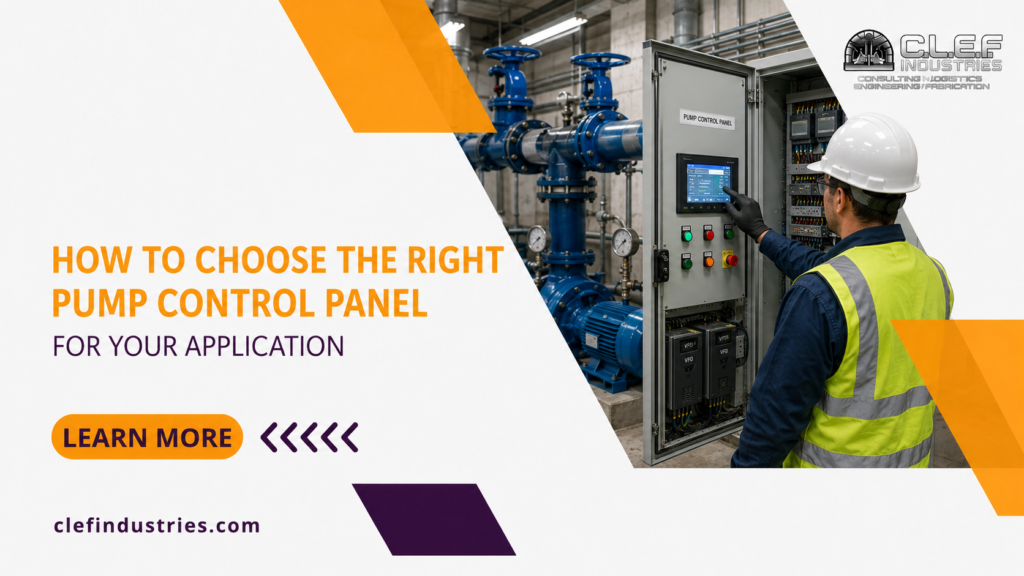
EG Controls has all the advanced functions needed in a pump control panel.
Remote Monitoring: The operator can check the running condition of the pumps remotely.
SCADA & IoT Integration: Connectivity with SCADA and IoT means factories can use more systems without gaps.
Variable Frequency Drives (VFDs): Variable speed of motors can be used in response to varied demand.
Predictive Maintenance: Using predictive maintenance, sensors catch any problem with assets before it results in failure.
Data Logging: Track sales regularly, browse your reports, and improve performance as time goes on.
With these features, the environment for pumping becomes smarter and able to adjust better.
How Enhanced Greening or EG Benefits the Efficiency of the System
Several important aspects of EG Controls bring about efficiency gains:
1. Demand-Based Operation
VFDs allow pumps to run at a slower speed instead of being on at max speed all the time. But they modify output by using measurements of current flow or pressure.
2. Remote Oversight
There is no need for an on-site operator to perform routine checks on pump condition. Immediate alerts are given if anything seems different, helping to solve problems early.
3. Fewer Breakdowns
Predictive maintenance techniques Single out worn-out parts before they cause trouble. This makes it so devices are available more often and repairs are rare.
4. Energy Savings
By operating only when needed and at optimal speeds, smart systems cut energy use by 20–30% in many cases.
Use Cases: Where EG Controls Shine
Facilities for the Treatment of Water
The speed at which water moves in treatment can change a lot. The system can adapt automatically, saving energy and keeping the treatment consistent, using EG Controls.
Creating Medical Drugs
What counts most is being exact. Using EG Controls makes it possible to tightly manage chemical dosing, cooling, and CIP for better and safer results.
The food & beverage industry
Because smart pumps regulate flow and temperature without requiring assistance, products are made more consistently and safely.
Comparison Table: Traditional vs. EG-Controlled Pump Systems
| Feature | Traditional Systems | EG-Controlled Systems |
|---|---|---|
| Monitoring | Manual, local | Remote, real-time |
| Operation Mode | Constant speed | Variable speed (VFD) |
| Energy Efficiency | Low | High |
| Fault Detection | After failure | Before failure (predictive) |
| Integration | Limited | SCADA/IoT compatible |
| Data Logging | None or manual | Automatic |
| Maintenance | Reactive | Proactive |
Environmental Benefits
Using pumps in an intelligent way is better for the environment as well as for business. By cutting energy use and prolonging the service life of equipment:
- There are fewer carbon emissions.
- With time, systems rely on fewer spare parts.
- It becomes easier for businesses to obey environmental rules.
EG Controls helps firms run their operations in a more environmentally friendly way.
How to Adopt Smart Pumping using EG Controls
Interested in making your facility better? Here’s what you can do to follow the approach:
- Audit Your Existing System: Assess your system to find what’s not working and areas where work stalls
- Define Requirements: Figure out the specifications you require. Choose EG Controls that meet your goals for being green.
Intelligent pumping saves money and also supports sustainability. By using less energy and wearing mechanical parts less.
- The emissions of carbon are reduced.
- Fewer spare parts are necessary in well-run systems as the years go by.
- Businesses usually find it easier to follow environmental regulations.
- Putting EG Controls in place makes operations greener.
3. Plan Integration: Decide which ways you will connect EG Controls to the systems you already use (for example, SCADA).
4. Implement & Train: Install the controls and properly instruct the team on how to use and maintain them.
5. Monitor & Optimize: Optimize & Improve: Consult the results from the built-in analytics to work on your operations.
Smart Pumping Trends in the Future
There is always more to what technology can do. The next breakthroughs in innovation are expected to be part of:
- Using AI: Forecast equipment faults with greater precision.
- Cloud-Based Dashboards: View all your different operations on one platform with cloud-based dashboards.
- Self-Healing Pumps: Some sewage pumps detect and correct small problems all by themselves.
By installing flexible systems like EG Controls today, you’re laying the foundation for future upgrades without needing major overhauls.
Final Thoughts
The benefits of integrating EG Controls into your pumping systems are clear: lower energy bills, fewer breakdowns, real-time oversight, and improved performance across the board. These systems transform basic mechanical pumps into intelligent assets that add measurable value to your operations.
In an era where efficiency is everything, smart pumping isn’t just an upgrade; it’s a necessity.